Mathieu Dreyfus names Esterhazy as the real traitor
An Officer and a SpyMathieu Dreyfus names Esterhazy as the real traitor marks the moment Alfred Dreyfus’s brother publicly named Charles Ferdinand Walsin Esterhazy as the author of the incriminating document. His letter to the Minister of War challenged the basis of Alfred Dreyfus’s conviction and demanded action; the report’s circulation also exposed how readily military officers could answer evidence with antisemitic suspicion and sympathy for the accused major.
The accusation
The announcement appeared on Wednesday 17 November beneath a headline declaring that Dreyfus’s brother had named the real traitor. Mathieu Dreyfus wrote to the Minister of War that the accusation against Alfred rested on an unsigned, undated document alleging that confidential papers had been delivered to a foreign agent. He identified Walsin Esterhazy, an infantry major, as the document’s author and asserted that Esterhazy’s handwriting matched it.
The letter made its case through a pointed contrast: Alfred Dreyfus had already been convicted, while the man Mathieu identified as the document’s writer had been suspended from active service since the previous spring for temporary ill health. Mathieu appealed to the minister to act swiftly now that the alleged perpetrator had been identified. The accusation was therefore more than a denial of his brother’s guilt: it placed a named alternative suspect before the authorities and made their response a test of whether justice would follow the evidence.
The report reaches Sousse
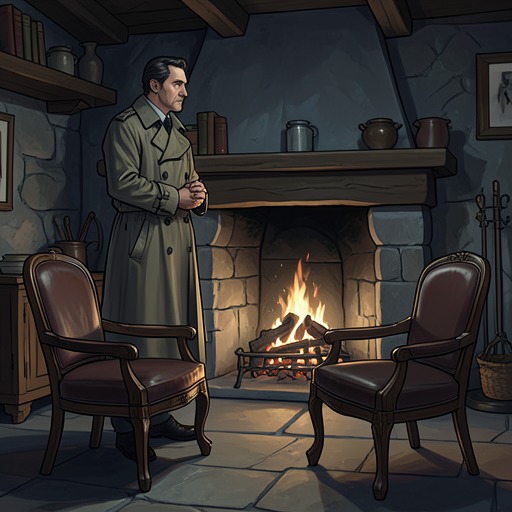
The news reached the Sousse Military Club through the newspaper, which passed from hand to hand. Georges Picquart read the report after lunch and withdrew to a window, appearing absorbed in his novel while listening to the officers discuss it. The scene brings the public charge against Esterhazy into a military setting far from Paris, where the reactions to it reveal the assumptions that the accusation had to confront.
One officer treated Mathieu’s intervention as proof that Jews collectively protected one another. Another expressed pity for Esterhazy. A captain cited Esterhazy’s own letter to Jean-Baptiste Billot, in which Esterhazy had requested an inquiry and offered to answer the charges, and supported that request. The conversation ended with the first officer invoking Jewish money as an obstacle to a fair outcome; the captain then offered twenty francs toward a subscription for Esterhazy. The report did not simply circulate information: it became a prompt for officers to recast an allegation against a named major as persecution of him.
Evidence, prejudice, and consequence
The episode sets the precision of Mathieu’s allegation against the looseness of the club’s response. His letter specified the document, its alleged function, its writer, and the handwriting comparison. The officers’ discussion, by contrast, moved quickly from an asserted Jewish conspiracy to concern for Esterhazy and an offer of financial support, without addressing the handwriting claim. In the scene, the accusation is heard, but its evidentiary content competes with a ready-made explanation rooted in antisemitism.
Esterhazy’s request for an inquiry also complicates the public exchange: he presents himself as willing to answer charges, while Mathieu insists that the handwriting identifies him as the author of the document behind Alfred’s conviction. The excerpt records the public naming and its reception, not the authorities’ eventual response or the outcome of an inquiry. Its immediate consequence is instead a sharp change in what can be openly alleged: the identity of the supposed author is now stated in print, while the club’s reaction shows how fiercely that claim will be resisted or redirected.